Medically reviewed by KNMC Hospital Last updated: September 2026
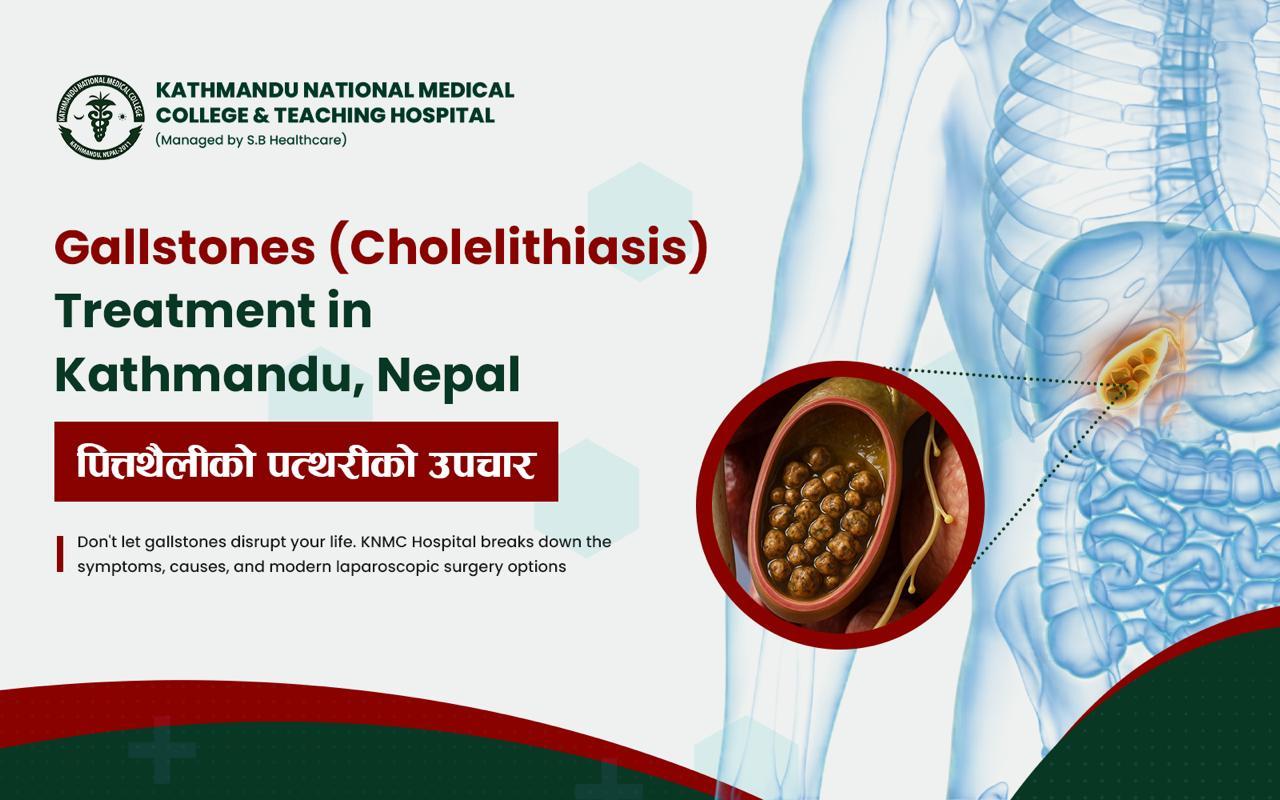
Gallstones, known as (पित्तथैलीको पत्थरी) or (पित्तथैलीको ढुंगा), are a common digestive problem that many people in Nepal live with, often without even realising it. Some gallstones cause no trouble at all and are only found by chance during an unrelated scan. Others cause sudden, sharp pain and need prompt medical attention. This article explains what gallstones are, why they form, and what treatment, including laparoscopic surgery, generally involves.
What are gallstones (पित्तथैलीको पत्थरी)?
Gallstones are hard, pebble-like pieces of material, usually made of cholesterol or bilirubin, that form in your gallbladder. Gallstones can range in size from a grain of sand to a golf ball. The gallbladder can make one large gallstone, hundreds of tiny stones, or both small and large stones.
When gallstones block the bile ducts of your biliary tract, the gallstones can cause sudden pain in your upper right abdomen. This pain is called a gallbladder attack, or biliary colic. If your symptoms continue and they’re left untreated, gallstones can cause serious complications.
However, most gallstones don’t cause blockages and are painless, also called “silent” gallstones.
What are gallstone types?
1. Cholesterol Gallstones
- Mainly made of cholesterol
- Usually yellow or yellow-green in colour
- The most common type of gallstone
2. Pigment Gallstones
- Mainly made of bilirubin
- Usually darker in colour than cholesterol stones
- Divided into black pigment stones and brown pigment stones
3. Mixed Gallstones
- Contain a combination of substances, such as cholesterol, bilirubin, calcium salts, and other components
- Composition can vary from one stone to another
- Some show features of both cholesterol and pigment stones
Comparing the Three Types
| Factor | Cholesterol Gallstones | Pigment Gallstones | Mixed Gallstones |
| Main component | Cholesterol | Bilirubin | Cholesterol, bilirubin, and calcium salts |
| Typical color | Yellow or yellow-green | Dark brown to black | Varies, often mixed shades |
| How common | Most common type | Less common than cholesterol stones | Fairly common, especially in longer-standing cases |
| Often associated with | Obesity, high-fat diet, rapid weight loss | Conditions causing high bilirubin, such as haemolysis or liver disease | A combination of the risk factors for both other types |
| Subtypes | None specific | Black and brown pigment stones | Varies by stone |
What are the causes and risk factors of gallstones?
- Obesity and rapid weight loss: Being overweight, or losing weight very quickly, can both raise the risk of gallstones forming.
- Genetics: A family history of gallstones increases an individual's own likelihood of developing them.
- High levels of bilirubin in the blood: Conditions that cause excess bilirubin, such as hemolysis, raise the risk of pigment stone formation specifically.
- Hormonal imbalances: Hormonal changes during pregnancy, or from certain medications such as birth control pills or oestrogen replacement therapy can increase the risk.
- Inflammatory bowel disease: Conditions such as Crohn's disease and ulcerative colitis are associated with a higher risk of gallstone formation.
- Metabolic disorders: Conditions like diabetes can contribute to gallbladder stone development.
- Prolonged fasting or a high-fat, high-cholesterol diet: Certain dietary patterns increase the concentration of substances that form stones.
Signs and Symptoms of Gallstones
- Upper abdominal pain: A sharp, sudden pain, or a dull ache, typically in the upper right abdomen or upper back.
- Nausea or vomiting: These often accompany the abdominal pain, particularly after a fatty meal.
- Indigestion or bloating: Discomfort or bloating after eating is common with gallstones.
- Fatigue: Pain and general discomfort can leave a person feeling tired or weak.
- Jaundice (kamalpitta / कमलपित्त): If a stone blocks the bile duct, it can cause yellowing of the skin and eyes.
- Clay-coloured stools: This can occur when gallstones are complicated by a bile duct blockage.
- Fever or chills: These suggest inflammation or infection related to the gallbladder or bile.
- Loss of appetite: Pain and discomfort often reduce appetite.
- Sweating: Some people sweat alongside the abdominal pain.
- Rapid heartbeat: The pain and discomfort from gallstones can also raise heart rate.
Complications of Gallstones
- Acute cholecystitis: A stone blocking the opening of the gallbladder can cause inflammation, leading to severe or persistent upper-right abdominal pain, fever, nausea, and vomiting.
- Bile duct obstruction: A stone that moves into and blocks the common bile duct can cause abdominal pain, jaundice, dark urine, and pale or clay-coloured stools.
- Cholangitis: An infected, blocked bile duct can cause fever, chills, abdominal pain, and jaundice and can become a serious infection requiring urgent treatment.
- Gallstone pancreatitis: A stone blocking the area where the bile duct and pancreatic duct drain into the intestine can inflame the pancreas, causing severe upper abdominal pain, nausea, and vomiting.
- Gallstone ileus: Rarely, a large stone passes into the intestine through an abnormal connection with the gallbladder and causes a bowel obstruction, with symptoms such as abdominal pain, vomiting, bloating, and difficulty passing stool or gas.
- Empyema of the gallbladder: Severe infection can cause pus to collect inside the gallbladder, particularly when it remains blocked.
- Gangrene or perforation of the gallbladder: Severe or untreated inflammation can reduce blood flow to the gallbladder, occasionally leading to tissue death or a perforation.
- Recurrent bile duct stones: Stones can occasionally develop in, or remain within, the bile ducts even after the gallbladder has been removed.
- Chronic gallbladder inflammation: Repeated episodes of gallstone-related inflammation can lead to long-term gallbladder problems.
Diagnosing Gallstones in Nepal
Diagnosing gallbladder stones involves a combination of imaging tests and a physical examination. Common diagnostic methods include:
- Ultrasound: The most common imaging test, using high-frequency sound waves to create detailed images of the gallbladder and identify gallstones.
- CT scan: Uses X-rays to detect stones, including those in areas that are harder to see on ultrasound.
- MRI: Not usually the first test used, but it can create detailed images of the gallbladder, bile ducts, and surrounding organs using a magnetic field.
- HIDA scan: Uses a small amount of radioactive material and a special camera to detect blockages or other gallbladder issues.
- Blood tests: Can check for signs of infection, inflammation, or other gallbladder-related issues, including bilirubin, alkaline phosphatase, and amylase levels.
- Physical examination: The doctor checks for signs of inflammation in the upper right abdomen, which can indicate complicated gallstones.
Gallstone Treatment in Kathmandu
Most people with gallstones will not need treatment, since many stones cause no symptoms at all. However, if gallstones are causing pain or complications, it's advisable to consult a doctor for evaluation. Treatment options depend on factors such as the size and location of the stones and the individual's overall health.
Medications: Medications may be prescribed by doctors to help prevent stones from forming in individuals at higher risk. Ursodeoxycholic acid and chenodiol are commonly used for this purpose.
Surgery: Gallbladder removal surgery, known as cholecystectomy, is the most common treatment for gallstones causing problems. When choosing where to have this procedure done, it's worth confirming that the surgical team has experience specifically with gallbladder surgery.
- Laparoscopic cholecystectomy: This modern, minimally invasive technique uses a few small incisions and a lighted camera device to locate and remove the gallbladder. Many patients are able to go home the same day or the next day if there are no complications.
- Open cholecystectomy: This approach is used when the gallbladder is significantly inflamed or if complications arise during a laparoscopic procedure.
At KNMC Hospital, Kathmandu, evaluation and treatment for gallstones are provided by the General Surgery department. Dr Padam Bhusal, General Surgery, laparoscopic surgery, KNMC, consults on gallstones and a broad range of general and gastrointestinal surgical conditions. View Dr. Padam Bhusal's profile and book an appointment.
How to Prevent Gallstones
There is no guaranteed way to prevent gallstones, though a generally healthy lifestyle may help reduce the risk or delay their progression:
1) Maintain a healthy diet
2) Maintain a healthy weight
2) Avoid crash dieting
3) Limit processed foods
4) Get regular exercise
5) Limit alcohol consumption
6) Take vitamin C through diet or supplements, where appropriate
7) Consult a doctor if there is a family history of gallstones
8) Get enough sleep
9) Discuss with your doctor whether ursodeoxycholic acid (UDCA) supplements could be appropriate for your individual risk factors
FAQs
What size gallbladder stones need surgery?
There isn't a single size that automatically requires surgery. The decision is usually based on whether the stones are causing symptoms or complications, though larger stones (generally over 3cm) are sometimes discussed for removal even without symptoms, due to a higher long-term cancer risk. A surgeon's evaluation is the best way to decide.
Which size of gallbladder stone is dangerous in mm?
There isn't a simple "bigger is more dangerous" rule. Smaller stones, especially under about 5mm, can move more easily into and block the bile duct, which is linked to pancreatitis. Larger stones, generally over 3 cm, are associated with a higher long-term risk of gallbladder cancer instead. In practice, doctors weigh symptoms and stone behaviour together, not size alone.
How are gallbladder stones removed?
Most commonly through laparoscopic cholecystectomy, a minimally invasive surgery to remove the gallbladder. Open surgery, or non-surgical options like oral dissolution therapy, may be used in select cases.
What is the reason for the stone in the gallbladder?
Gallstones form when bile contains too much cholesterol or bilirubin, or when the gallbladder doesn't empty properly, allowing these substances to crystallize over time.
Do all gallstones need to be removed?
No. Many gallstones cause no symptoms and are found incidentally. These often don't need treatment unless they begin causing pain or complications.
Is gallstone removal surgery painful?
Laparoscopic cholecystectomy generally involves less pain than open surgery, and most patients manage postoperative discomfort with prescribed pain medication.
What is the recovery period after gallstone surgery?
Recovery after laparoscopic cholecystectomy is generally quicker, with many patients returning to normal activities within one to two weeks. Open surgery typically requires a longer recovery period.
Are cholelithiasis and gallstones the same?
Yes. Cholelithiasis is simply the medical term for the presence of gallstones.
Are there any dietary changes after gallstone surgery?
Most people gradually return to a normal diet, though doctors often recommend a lower-fat diet in the initial weeks to help the digestive system adjust.
Can gallstones resolve without surgical intervention?
Small cholesterol stones may sometimes be managed with medication such as ursodeoxycholic acid, though this can take months to years and isn't effective for every stone type. Many gallstones, particularly pigment stones, don't resolve without treatment.
Department: General Surgery | Consulting Doctor: Dr. Padam Prasad Bhusal
Book a consultation with KNMC's General Surgery team:
01-4771556 | Book Appointment | Contact Us
Follow KNMC: Facebook | Instagram | LinkedIn | TikTok